
Category: Business / Finance

The rise and fall of Bitcoin

THE great Sir Isaac Newton may have revolutionised our knowledge of the world but he still had his blind spots. He was sucked into the great mania of his day, the South Sea Bubble (pictured) and lost a lot of money. “I can calculate the motion of heavenly bodies but not the madness of people” he ruefully reflected. In retrospect, he should have pondered the popular saying that was used to define his law of gravity: “What goes up, must come down”.

Investors in Bitcoin are learning this old truth. The price of the cryptocurrency peaked last month at somewhere over $19,000 (there is a very wide spread, a problem in itself) but, at the time of writing (around 11am GMT), some exchanges now show a price below $10,000.

Perhaps the best way of understanding bitcoin is through a model of how bubbles operate. The classic model, developed by Hyman Minsky and elaborated by Charles Kindleberger, a historian who studied bubbles, has five stages:…


…read more

Artificial intelligence dominated the Consumer Electronics Show

WHEN the electronics industry meets in Las Vegas at CES, its main trade show, buzzwords abound. But rarely has one been as pervasive as this week. “Artificial intelligence” or variations on the theme (“AI-driven”, “AI-powered” and so on) were slapped across most new products—although often the artificial overcame the intelligence.

Those attending gawped at an interactive bathroom mirror on the stand of Haier, a giant Chinese white-goods maker. Look into it, like the Wicked Queen in Snow White, and instead of being told you are the fairest, your data profile appears on the glass. It displays weight (from an interactive scale), urine-test results (from a sensor on a connected lavatory) and other health-related things.

For those attentive visitors who could see past the AI assault, another theme could be identified: firms innovating around how they innovate. Haier’s stand also had a new device that is the result of combining its product development with that of…

…read more

How China won the battle of the yuan

How China won the battle of the yuan

“THE horse may be out of the proverbial barn.” So wrote Ben Bernanke, a former chairman of the Federal Reserve, in early 2016, arguing that capital controls might be powerless to save China from a run on its currency. He was far from alone at the time. As cash rushed out of the country, analysts debated whether the yuan would collapse, and some hedge funds bet that day was coming fast. But two years on, the horse is back in the barn: the government’s defence of the yuan has succeeded, in part through tighter capital controls.

The latest evidence was an 11th consecutive monthly increase in foreign-exchange reserves in December. During that time China’s stockpile of official reserves, the world’s biggest, climbed by $142bn, reaching $3.14trn, roughly double the cushion usually regarded as needed to ensure financial stability. Another sign of China’s success is the yuan itself. At the start of 2017 the consensus of forecasters was that the currency would continue to weaken; it finished the year up by 6% against the dollar.

Investors and analysts were not wrong in viewing Chinese capital controls as porous. Enterprising types had—and have—umpteen ways to sneak money out, from overpaying for imports to smuggling …read more

India’s tea industry is going through tepid times

Tasseography in progress

BULK tea sales at the offices of J Thomas in Kolkata, which first started auctioning the stuff in 1861, lack the boisterousness of years past. Gone is the noisy trading pit, replaced by a handful of buyers sitting behind their laptops in a silent auditorium. Armed with tasting notes, they bid electronically on hundreds of lots drawn from the city’s hilly hinterlands in Assam and West Bengal. To passing visitors, it appears as if everyone in the room could do with a little caffeination. Yet within only three hours or so, enough tea changes hands to brew 24 Olympic-sized swimming pools.

If Indian tea delights those who get to drink the country’s finest blends, it frustrates all those who plant, pluck and peddle it. Archaic government regulations have in recent years pushed up production costs to around 175 rupees ($2.70) per kilogram, well above average auction prices of 140 rupees, which makes large cultivators grumble. Pickers complain about…

…read more

Spectre and Meltdown prompt tech industry soul-searching

THE timing could hardly have been worse. Just as the tech industry was preparing for its big annual trade show, CES, held this week in Las Vegas, it was hit by one of the most worrying computer-security scares of recent times. On January 3rd it emerged that most microprocessors, the brains of electronic devices, are vulnerable to hacker attacks aimed at stealing sensitive data, such as passwords or encryption keys. Instead of enthusing over the new gadgets presented at the event (see article), many attending discussed only one question: how great would the damage be?

Once the weaknesses became public earlier this month (researchers had first discovered them in June), some cyber-security experts said the only full protection would be to replace all affected processors. The problem is baked into the chips and enables two separate, but…

…read more

Spotify opts for an unusual way of going public

FOR seasoned bankers and starry-eyed entrepreneurs alike, doing an IPO, or initial public offering, is synonymous with the very idea of taking a firm public. No wonder, then, that the decision by Spotify, a music-streaming service, to opt for an unconventional alternative called a “direct listing” has prompted debate. Instead of paying investment banks hefty fees to arrange an IPO, Spotify plans to have existing shares simply switch one day to being tradable on the New York Stock Exchange (NYSE).

IPOs themselves have become rarer, as startups such as Uber and Airbnb have chosen to raise money through private markets instead. Although there was an uptick in the number of IPOs in America in 2017—108, compared with 74 in 2016—the average number of IPOs has remained at around 100 annually since 2000, compared with over 300 in the course of the two previous decades. But until now no big company had contemplated direct listing as an alternative. The structure has been seldom used: in…

…read more

Predicting doom for the bond market

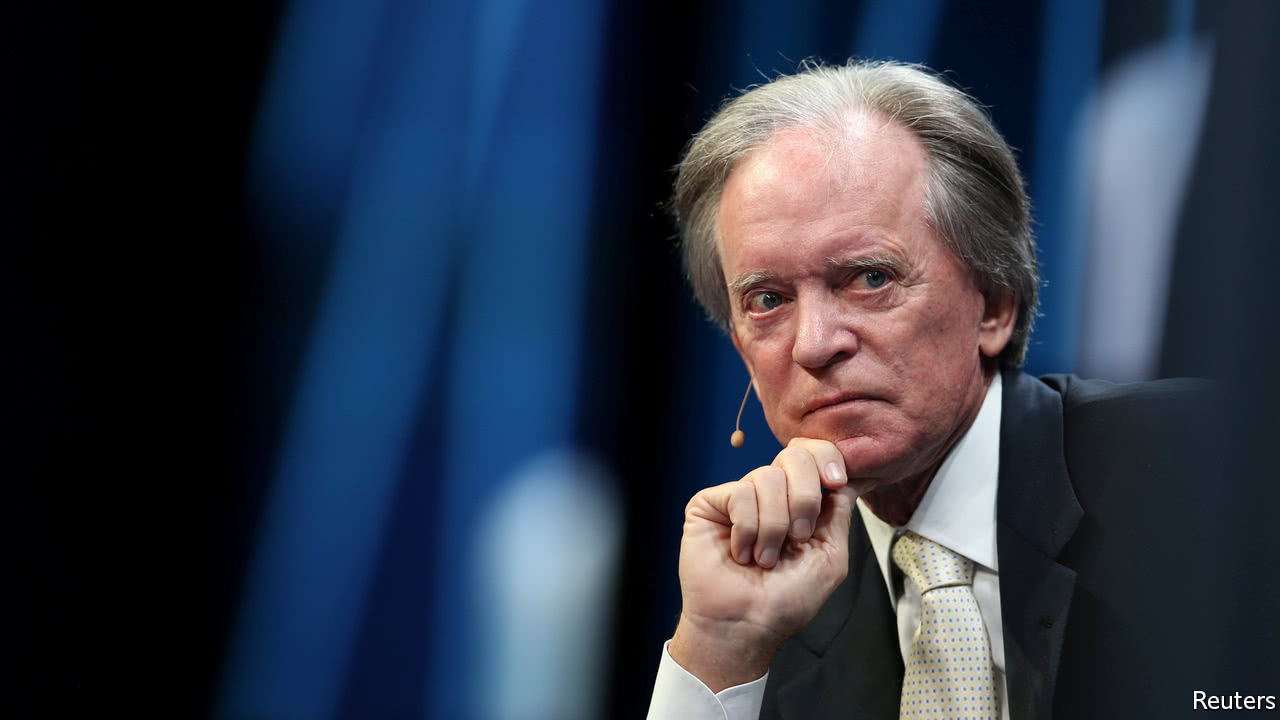
INVESTORS are dragging their attention away from the stockmarket for a moment to figure out what is going on in the other main part of their portfolios: government bonds. Yields have been rising so far this year and Bill Gross, one of the sector’s gurus, has said the long bull market (which dates back to the early 1980s) is finally over.

This certainly seems to be the month for big calls; the noted equity bear Jeremy Grantham has already pointed to the potential for a “melt-up” in the stockmarket. Mr Gross, who runs money for Janus but made his name at Pimco, said that the 25-year trend lines had been broken for both the five- and ten-year bonds.

The end of the bond bull market has been called many times, dating back at least to September 2011. There…

…read more

Investment banks’ cull of company analysts brings dangers

THEY are not extinct, nor even on the endangered-species list. But company analysts, once among the most prestigious professionals in the stockmarket, are being culled. New European rules, with the catchy name of MiFID2, have just dealt analysts another blow. A study by Greenwich Associates estimates that the research budget may drop by 20% this year.

In their heyday in the late 1980s and early 1990s, analysts could make and break corporate reputations. A “buy” or “sell” recommendation from the leading two or three analysts in an industry could move a share price substantially. Fund managers, and many financial journalists, relied on analysts to spot those companies that were on a rising trajectory, and those where the accounts revealed signs of imminent trouble. And the best analysts were very well paid.

But that golden age was built on some rusty foundations. Analysts were well paid because they worked for the big investment banks. But those big banks made money…

…read more

Where did the inflation go?

THE strength of the global economy is one reason why the stockmarket has started 2018 in buoyant mood (with the Dow passing 25,000). At some point, in any expansion, businesses find it harder to recruit workers or get the materials they need; these bottlenecks cause wages and prices to rise. Central banks then start to tighten monetary policy, a process that can eventually turn the market (and the economy) down.

After many years of ultra-low interest rates, the Federal Reserve has started to tighten monetary policy. There were three rate rises in 2017, and three are expected this year. The idea is to tighten gradually and (keep ahead of the curve) so that inflation does not accelerate so fast that a very sharp monetary tightening is needed.

The problem is that inflation remains hard to spot. Continue reading

…read more

Where did the inflation go?

THE strength of the global economy is one reason why the stockmarket has started 2018 in buoyant mood (with the Dow passing 25,000). At some point, in any expansion, businesses find it harder to recruit workers or get the materials they need; these bottlenecks cause wages and prices to rise. Central banks then start to tighten monetary policy, a process that can eventually turn the market (and the economy) down.

After many years of ultra-low interest rates, the Federal Reserve has started to tighten monetary policy. There were three rate rises in 2017, and three are expected this year. The idea is to tighten gradually and (keep ahead of the curve) so that inflation does not accelerate so fast that a very sharp monetary tightening is needed.

The problem is that inflation remains hard to spot. Continue reading

…read more