Author: Shivendra Singh

Jury finds Elon Musk’s ‘stupid tweets’ caused Twitter investors’ losses

Elon Musk shown looking downward in front of upside-down Twitter logos.

A California jury determined that Elon Musk misled Twitter investors before making a $44 billion deal to buy the company in 2022, reports CNBC. The New York Times reports that Musk had testified this month that he didn’t believe his posts would spook markets, but he did say that “If this was a trial about whether I made stupid tweets, I would say I’m guilty.”

CNBC reports Musk’s attorneys are expected to file an appeal, as damages could reach as high as $2.6 billion, according to attorneys representing the plaintiffs.

While finding that Musk did not engage in a specific scheme to defraud shareholders, the jury cited two of Musk’s tweets, f …

Read the full story at The Verge.

…read more

Elon Musk misled investors during his Twitter takeover, jury finds

Elon Musk misled investors during his Twitter takeover, jury finds

A group of former Twitter investors have prevailed at a federal civil trial over Elon Musk’s actions amid his $44 billion acquisition of the social platform in 2022. A jury in San Francisco found Friday that tweets made by Musk about fake accounts on the platform had defrauded investors in the company. The jury sided with Musk on other allegations in the case. 

It’s not yet clear how much Musk will owe in damages as a result of the case but, as the Associated Press reports, it could amount to billions of dollars. Jurors calculated that shareholders should get “between about $3 and $8 per stock per day.” 

The class action lawsuit, one of several brought against Musk in the months following his takeover of the company, cited Musk’s tweets about fake accounts on the platform. Facing a sinking Tesla share price in the days after announcing he would buy Twitter for $54.20 a share, the suit said Musk made tweets and statements that were intentionally meant to drive down Twitter’s share price in an attempt to renegotiate or exit the deal. 

The suit called out Musk’s May 13, 2022, tweet that claimed the Twitter …read more

An automated moderation error left Tumblr users panicked

Illustration featuring the Tumblr wordmark logo

Tumblr users were left scrambling on Wednesday after dozens of accounts were banned in the same afternoon by an automated system. Numerous users contacted The Verge about the incident, claiming that the wave of bans disproportionately seemed to impact accounts run by users who identify as trans women, many of whom were given no specific reason for why their accounts were terminated. Screenshots of the email some users received notifying them of the ban state that, “This action was taken as the result of an internally-generated report. Automated means may have been used to identify the content at issue.”

Chenda Ngak, head of communications …

Read the full story at The Verge.

…read more

Pinterest CEO says teens under 16 should be banned from social media (but not Pinterest)

Pinterest CEO says teens under 16 should be banned from social media (but not Pinterest)

Pinterest’s CEO has thrown his support behind an Australia measure banning social media for younger teens and is calling for governments around the world to implement similar bans. “Social media, as it’s configured today, is not safe for young people under 16,” Ready writes in a piece published by Time. “We need a clear standard: no social media for teens under 16, backed by real enforcement, and accountability for mobile phone operating systems and the apps that run on them.”

Ready is one of the highest-profile tech CEOs to come out in favor of a broad ban on social media for teens. That may also seem like a bold stance for someone who runs a platform with a user base that’s more than 50 percent Gen Z, but Ready doesn’t think that ban should apply to Pinterest. Pinterest, as he notes, already bars teens under 16 from accessing messaging features and other social features. It also makes teen accounts private by default

A spokesperson for Pinterest confirmed the company has no plans to change its own policies regarding users under 16, and said Pinterest considers itself a “visual search platform” not social …read more

The White House proposes new AI policy framework that supersedes state laws

The White House proposes new AI policy framework that supersedes state laws

The White House has announced a new AI policy framework that calls for Congress to craft federal regulation that overrules state AI laws. The Trump administration has made multiple attempts to overrule more restrictive state-level AI regulation, but has failed so far, most notably in the passing of the “One Big Beautiful Bill.”

The framework focuses on a variety of topics, covering everything from child privacy to the use of AI in the workforce. “Importantly, this framework can succeed only if it is applied uniformly across the United States,” The White House writes. “A patchwork of conflicting state laws would undermine American innovation and our ability to lead in the global AI race.”

In terms of child privacy protections, the framework ask for Congress to require companies to provide tools like “screen time, content exposure and account controls” while also affirming that “existing child privacy protections apply to AI systems,” including limits on how data is collected and used for AI training. The framework also says carveout states should be allowed to enforce “their own generally applicable laws protecting children, such as prohibitions on child sexual abuse material, even where such material is generated …read more

Microsoft will yank Copilot from some Windows apps and let you move the taskbar again

Microsoft will yank Copilot from some Windows apps and let you move the taskbar again

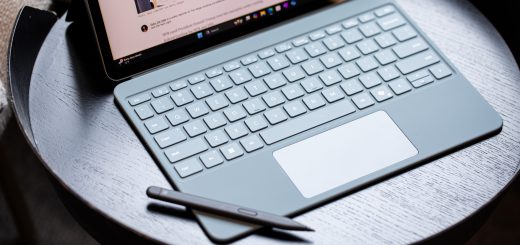
After one too many of you threatened to switch to Linux, Microsoft has published a long list of changes it plans to make to Windows 11. In a lengthy blog titled “Our commitment to Windows quality,” Pavan Davuluri, the executive vice president of Windows and Devices, said the company has spent a “great deal” of time in recent months reading feedback from users. “What came through was the voice of people who care deeply about Windows and want it to be better,” he said. To that end, Windows Insiders can expect to see some of the changes Microsoft plans in response to all criticism begin rolling out starting this month.  

Most notably, Microsoft ease up on the AI pedal. “You will see us be more intentional about how and where Copilot integrates across Windows, focusing on experiences that are genuinely useful and well-crafted,” writes Davuluri. As a first step, Microsoft says it will remove “unnecessary Copilot entry points,” starting with apps like the Snipping Tool, Photos, Widgets and Notepad. 

Elsewhere, users can look forward to additional taskbar customization, allowing them to position the interface element at the top or sides of the screen; less disruptive updates, with the …read more

A new Nintendo Switch 2 could be the poster child for replaceable batteries

A photo of Mario Kart World running on a Nintendo Switch 2 in handheld mode.

Nintendo plans to release a Switch 2 revision in the European Union that will let users replace their own batteries, Nikkei reports. The current version of the Switch 2 has a glued-in battery. But Nintendo apparently plans to make the change in order to comply with EU rules going into effect in February 2027 that will require devices to let users easily swap out portable batteries.

The new version of the Switch 2 will be released “soon,” and both the console and the Joy-Cons will have replaceable batteries, according to Nikkei. In Japan, the console’s specifications will remain the same, Nikkei says. Nintendo didn’t immediately reply to a r …

Read the full story at The Verge.

…read more

Future Sony PlayStation games will use AI to imagine new frames

Mark Cerny, the lead architect of the PlayStation 5 and PS5 Pro, told Digital Foundry that ML-based frame generation tech is coming to “PlayStation platforms” in the future, letting the game console use AI to imagine new frames between the ones it’s actually rendering, which can create smoother perceived image quality while (typically) introducing some amount of lag. At least, that’s how it works on PCs, where critics call them “fake frames.”

It’s not clear whether Cerny means he’ll bring it to the PS5 Pro, which just got better AI upscaling with an upgraded PlayStation Spectral Super Resolution (PSSR) technique, or whether it’ll have to w …

Read the full story at The Verge.

…read more

Microsoft is ending the Windows Update nightmare — and letting you pause them indefinitely

In 2015, Microsoft decided that you shouldn’t be in control of updating your PC anymore. At first, it seemed like a good idea to keep malware at bay – but soon, users discovered their computers were automatically shutting down and erasing work in the middle of the day. Then, Microsoft abused its power to install shovelware apps and force-feed us a new web browser.

Now, each new update might add unwanted Copilot AI buttons or prevent our PCs from properly booting. My colleague Tom Warren wrote about Microsoft’s many buggy Windows updates in this story.

But today, as Microsoft commits to fix Windows 11, it’s also signaling that our long Win …

Read the full story at The Verge.

…read more

Three people have been charged with illegally exporting NVIDIA GPUs to China

Three people have been charged with illegally exporting NVIDIA GPUs to China

The US Attorney’s Office for the Southern District of New York has charged three people with illegally exporting NVIDIA GPUs to China in violation of the Export Control Reform Act. NVIDIA’s chips have become a critical component in the rush to train and run increasingly complex artificial intelligence models, one the US has sought to manipulate with export controls and profit-sharing schemes with NVIDIA.

The three people, Yih-Shyan “Wally” Liaw, Ruei-Tsang “Steven” Chang and Ting-Wei “Willy” Sun, two employees and one contractor working for US IT company Super Micro Computer, allegedly circumvented export control laws via a multi-step scheme that involved creating fake orders for servers with NVIDIA chips from Southeast Asian companies, that were then secretly sent to China. The plan involved paying a logistics company to repackage the servers in Taiwan, staging dummy servers to be inspected by Super Micro Computer’s compliance team and falsifying records so Liaw, Chang and Sun’s employer was unaware where the servers were actually being sent.

The DOJ claims Liaw, Chang and Sun facilitated the illegal purchase of $2.5 billion worth of servers between 2024 and 2025 in direct violation of US export …read more